What Is DISC Personality Testing? The Complete Guide
6 minutes |
Updated
06 July 2026

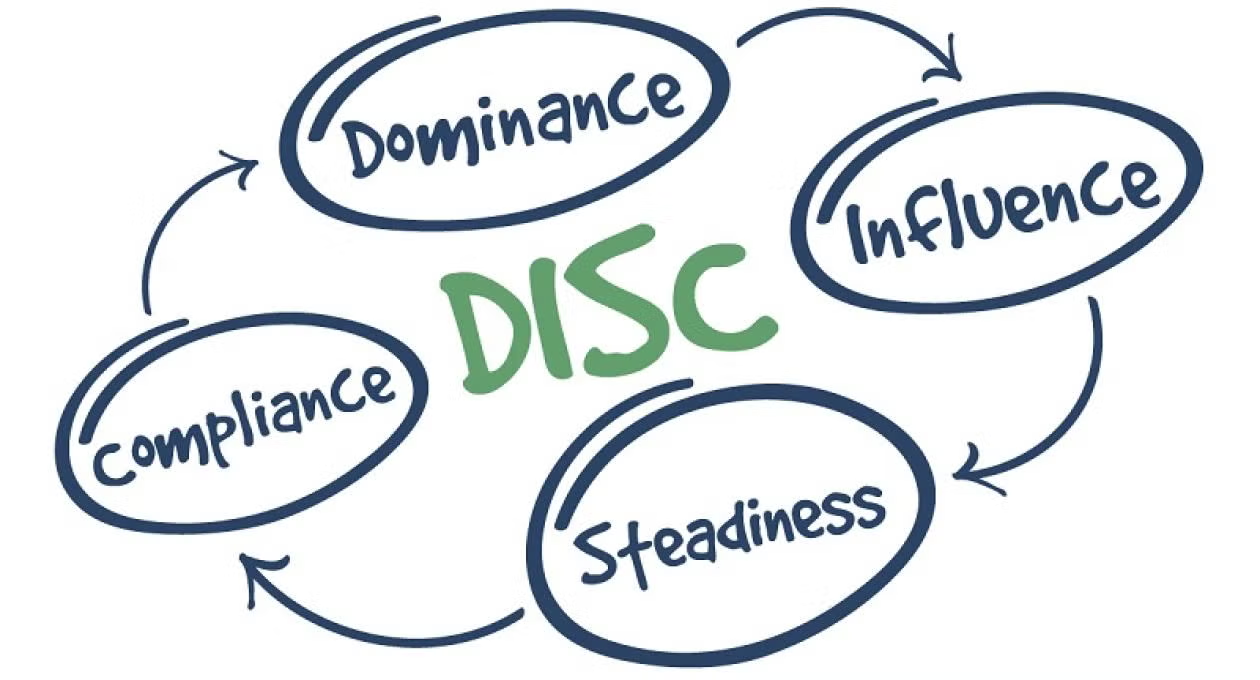
DISC personality testing is a workplace assessment framework used to understand how people tend to behave, communicate, and respond to different situations. It looks at four behavioral styles: Dominance, Influence, Steadiness, and Compliance.
The aim is to give individuals and organizations a clearer view of working preferences, team dynamics, and development needs.
Hiring, managing, and developing people should not rely on gut instinct alone. Interviews, CVs, and past experience all have value, but they rarely show the full picture of how someone may work with others day to day. That is where DISC personality testing can help.
In this guide, we’ll explain what DISC personality testing is, how DISC assessments work, what the four DISC styles mean, and how organizations use DISC insights to support better hiring, leadership, team development, and employee growth.
Key Takeaways: What Is DISC Personality Testing?
DISC personality testing is a behavioral assessment framework that helps people and organizations understand how individuals tend to communicate, collaborate, and respond at work.
Key points to remember:
- DISC stands for Dominance, Influence, Steadiness, and Compliance.
- In workplace contexts, DISC is best understood as a behavioral assessment, not a fixed personality label.
- DISC profiles can help explain communication style, motivation, work preferences, and likely responses to pressure.
- Organizations use DISC insights to support hiring, onboarding, leadership development, team effectiveness, and employee growth.
- DISC should not be used alone to make hiring or promotion decisions. It works best alongside interviews, skills evidence, performance data, and manager judgement.
- Thomas’s DISC-based behavioral assessments, including the Personal Profile Analysis (PPA), help turn behavioral insight into practical, evidence-led people decisions.
What Is DISC Personality Testing?
DISC personality testing is a behavioral assessment framework that helps explain how people tend to communicate, collaborate, make decisions, and respond to challenges at work. It is based on four behavioral styles: Dominance, Influence, Steadiness, and Compliance.
It was invented in 1928 by William Moulton Marston in his book ‘Emotions of Normal People’. He explained that people illustrate their emotions and responses using those four behavioral types.
At its simplest, DISC helps answer one useful workplace question: how is this person likely to behave in a given environment?
That makes it different from a broad personality test. While the term “DISC personality testing” is widely used, DISC is more accurately understood as a behavioral assessment. It does not measure intelligence, technical skill, emotional stability, or whether someone is “good” or “bad” at a role. Instead, it gives employers, managers, and individuals a clearer view of behavioral preferences, such as how someone may approach problems, influence others, respond to pace, or work within rules and procedures.
For organizations, DISC personality testing can provide a shared language for understanding people at work. For example, a hiring manager might use DISC insights to structure interview questions around behavioral fit. A team leader might use DISC profiles to improve communication across different working styles. An L&D manager might use DISC results to support coaching, development planning, or leadership conversations.
DISC Personality vs Behavioral Assessments: What Does DISC Measure?
DISC is often described as a personality test, but that label can be misleading. In workplace settings, DISC is better understood as a behavioral assessment because it focuses on how people tend to act, communicate, and respond in specific situations.
Personality is broad, it can include long-term traits, preferences, values, emotions, and patterns of thinking. Behavior is more observable, as it shows up in how someone approaches a deadline, responds to feedback, manages pressure, communicates with colleagues, or adapts to change.
DISC looks at those observable tendencies through four behavioral dimensions:
| DISC factor | What it broadly explores | Workplace relevance |
|---|---|---|
| Dominance | How someone approaches challenge, control and results. | Decision-making, problem-solving, pace and assertiveness. |
| Influence | How someone engages, persuades and connects with others. | Communication, collaboration, motivation and stakeholder relationships. |
| Steadiness | How someone responds to stability, support and consistency. | Teamwork, reliability, patience and change readiness. |
| Compliance | How someone approaches structure, quality and accuracy. | Detail, standards, risk, process and independent analysis. |
This is why DISC can be useful for managers and HR teams. It gives practical insight into work style rather than making broad assumptions about character. For example, someone with a high Dominance profile may prefer direct communication and fast decisions. Someone with a high Compliance profile may want more detail, evidence, and time to assess risk. Neither style is better. They simply need different conditions to do their best work.
What DISC does not measure matters just as much. It does not measure intelligence, job-specific skill, values, ethics, mental health, emotional intelligence, or leadership potential on its own. It should not be used as a standalone hiring decision, nor should it be treated as a fixed definition of who someone is. Behavior can shift depending on the role, environment, manager, team culture, and level of pressure.
Used well, DISC personality testing helps organizations understand how people prefer to work. Used poorly, it can become a shortcut or a label. The strongest value comes when DISC insights are combined with interviews, performance evidence, skills assessments, structured feedback, and real workplace context.
How DISC Personality Testing Works
DISC personality testing usually works through a structured questionnaire that asks people to choose words or statements that feel most and least like them. The aim is not to find a “right” answer. It is to identify patterns in how someone describes their natural behavioral preferences.
A typical DISC assessment looks at responses across the four DISC dimensions: Dominance, Influence, Steadiness, and Compliance. These responses are then used to create a DISC profile, showing which behavioral tendencies are strongest and how they may appear in a workplace setting.
The process usually follows a simple structure:
- The individual completes a questionnaire
They respond to a series of prompts about how they tend to behave, communicate, solve problems, work with others, and respond to rules or pressure. - Responses are mapped against the four DISC factors
The assessment identifies patterns linked to Dominance, Influence, Steadiness, and Compliance. These are not separate boxes. Most people show a blend of styles, with some factors more prominent than others. - A DISC profile is generated
The profile explains likely behavioral preferences, communication style, motivators, possible stress responses, and workplace tendencies. For example, it might show that someone prefers fast decisions and direct communication, or that they works best with structure, detail, and time to analyse information. - Results are interpreted in context
DISC results are most useful when they are connected to the person’s role, working environment, team dynamics, and development goals. The same behavioral style may show up differently depending on whether someone is leading a team, working in a client-facing role, managing operational detail, or navigating organizational change. - Insights are applied to workplace decisions
Managers and HR teams may use DISC profiles to support interview planning, onboarding, coaching, team development, leadership conversations, or communication planning.
Most teams miss one important point here: DISC does not tell you what someone is capable of doing. It tells you how they may prefer to approach work. That distinction matters.
For example, a person with a high Compliance profile may be naturally drawn to accuracy, quality, and evidence. That does not automatically make them a technical expert. A person with a high Influence profile may enjoy persuading others and building relationships. That does not automatically make them a high-performing salesperson.
The Four DISC Personality Types Explained
The DISC model groups behavioral tendencies into four main styles: Dominance, Influence, Steadiness, and Compliance. Most people are not just one style. A DISC profile usually shows a blend, with some behaviors appearing more strongly than others depending on the person, role, and working environment.
| DISC style | Core focus | Common strengths | Workplace tendencies |
|---|---|---|---|
| Dominance (D) | Results, challenge, action. | Decisive, direct, goal-focused. | Moves quickly, takes ownership, may challenge ideas or processes. |
| Influence (I) | People, persuasion, enthusiasm. | Sociable, optimistic, engaging. | Builds relationships, motivates others, prefers open communication. |
| Steadiness (S) | Support, consistency, cooperation. | Patient, dependable, calm. | Values stability, listens well, supports team harmony. |
| Compliance (C) | Accuracy, quality, structure. | Analytical, precise, careful. | Focuses on detail, follows standards, considers risk before acting. |
Understanding the four DISC personality types can help managers and teams recognise different working preferences without turning them into rigid labels. A high-D colleague may want pace and clear outcomes. A high-S colleague may want time, reassurance, and consistency. A high-I colleague may thrive through discussion and collaboration, while a high-C colleague may prefer evidence, structure, and space to think.
The key is not to decide which style is “best”. It is to understand how different styles show up at work, where they add value, and where they may need support.
Dominance (D) Personality Type
People with a high Dominance score tend to be direct, decisive, and focused on outcomes. They often like to move quickly, solve problems, take control of situations, and push through obstacles to reach a goal.
In the workplace, high-D individuals may bring energy and momentum to projects. They are often comfortable making decisions, challenging assumptions, and taking responsibility when something needs to happen quickly. In leadership or client-facing roles, this can be valuable when clarity, pace, and confidence are needed.
Their communication style is usually straightforward. They may prefer short, focused conversations over lengthy discussion, and they often appreciate people getting to the point. When working with a high-D colleague, it can help to be clear about objectives, timelines, and expected outcomes.
That said, Dominance can also create challenges if it is not managed well. A high-D person may sometimes come across as blunt, impatient, or overly forceful, especially to colleagues who need more time, context, or reassurance before moving forward. They may also become frustrated by slow decision-making, unclear ownership, or too much process.
A useful way to think about the D style is this: they often ask, “What needs to happen, and how quickly can we get there?” When that drive is balanced with listening, collaboration, and awareness of others’ working styles, high-D behavior can be a powerful force for progress.
Influence (I) Personality Type
People with a high Influence score tend to be sociable, expressive, and energised by interaction with others. They often enjoy building relationships, sharing ideas, encouraging collaboration, and creating enthusiasm around a goal.
In the workplace, high-I individuals can be strong communicators. They may help bring people together, build trust with clients or colleagues, and keep energy high during change, growth, or team projects. Their optimism and openness can make them effective in roles that involve persuasion, networking, facilitation, stakeholder engagement, or customer relationships.
Their communication style is usually warm, animated, and people-focused. They often prefer open discussion over isolated working, and may respond well to recognition, encouragement, and opportunities to contribute ideas. When working with a high-I colleague, it can help to create space for conversation while still keeping decisions, deadlines, and priorities clear.
There can be challenges too. A high-I person may sometimes move quickly from one idea to another, overlook details, or become frustrated by rigid processes and limited interaction. They may also find it difficult when their input is ignored or when communication feels overly formal or transactional.
A useful way to think about the I style is this: they often ask, “Who needs to be involved, and how can we bring people with us?” When that energy is paired with focus, follow-through, and attention to detail, high-I behavior can strengthen relationships and help teams move forward together.
Steadiness (S) Personality Type
People with a high Steadiness score tend to be calm, supportive, patient, and dependable. They often value cooperation, consistency, and trust, and may prefer working environments where expectations are clear and relationships are stable.
In the workplace, high-S individuals can bring balance to a team. They are often good listeners, thoughtful collaborators, and reliable contributors who help maintain harmony when work becomes busy or pressured. Their steady approach can be especially useful in roles that require patience, service, long-term relationship building, or careful support of others.
Their communication style is usually measured and considerate. They may prefer time to process information rather than being pushed into rapid decisions. When working with a high-S colleague, it can help to explain changes clearly, give context, and create space for questions. Sudden shifts, unclear priorities, or overly forceful communication may cause them to withdraw or feel unsettled.
There can be challenges if Steadiness becomes too cautious. A high-S person may avoid conflict, delay difficult conversations, or find it uncomfortable to challenge others directly. They may also need support during periods of rapid change, especially when decisions are made without consultation.
A useful way to think about the S style is this: they often ask, “How will this affect the team, and what do people need to feel supported?” When that care for stability is combined with confidence, adaptability, and open communication, high-S behavior can help teams build trust and work well together over time.
Compliance (C) Personality Type
People with a high Compliance score tend to be analytical, careful, structured, and focused on accuracy. They usually value quality, evidence, clear standards, and well-defined processes.
In the workplace, high-C individuals can bring rigour and objectivity to decision-making. They may be strong at spotting risks, checking details, improving processes, and making sure work meets the right standard. This can be especially useful in roles where accuracy, compliance, technical expertise, data, safety, or quality control matter.
Their communication style is often precise and considered. They may prefer information to be clear, logical, and backed by evidence. When working with a high-C colleague, it can help to provide detail, avoid vague assumptions, and give them time to review information properly before expecting a decision.
There can be challenges too. A high-C person may sometimes appear reserved, overly cautious, or reluctant to move forward without enough information. They may become frustrated by ambiguity, rushed decisions, or processes that feel poorly thought through. In fast-moving environments, they may need support balancing accuracy with pace.
A useful way to think about the C style is this: they often ask, “What does the evidence show, and how do we get this right?” When that focus on quality is balanced with flexibility, confidence, and timely action, high-C behavior can help teams make better, more considered decisions.
What Your DISC Profile Results Mean
Your DISC profile results show how strongly you tend to display behaviors linked to Dominance, Influence, Steadiness, and Compliance. They do not show whether you have “passed” or “failed”, and they should not be read as a fixed judgement of your personality.
A DISC profile usually highlights your most prominent behavioral style or blend of styles. For example, someone may show a strong Dominance and Influence pattern, suggesting they may be fast-paced, direct, persuasive, and energised by action. Another person may show stronger Steadiness and Compliance behaviors, suggesting they may prefer stability, structure, detail, and time to assess information before acting.
These combinations matter because most people are not one pure DISC type. A DISC profile is more useful when it shows the relationship between styles. It can help explain how someone may behave when they are comfortable, how they might adapt to their work environment, and how they may respond under pressure.
Managers should avoid using DISC results to label people. Saying “she is a high-C, so she will not cope with change” or “he is a high-I, so he will not focus on detail” misses the point. DISC can indicate likely preferences, but people adapt. Behavior can shift depending on role demands, team culture, leadership style, workload, confidence, and stress.
The best use of DISC profile results is as a starting point for better conversations. What helps this person do their best work? How do they like to receive feedback? What kind of environment supports them? Where might they need to flex their style?
That is where DISC personality testing becomes practical: not as a label, but as a clearer way to understand behavior at work.
What Are the Benefits of DISC Personality Testing?
The main benefit of DISC personality testing is that it gives people a clearer, shared language for understanding workplace behavior. Instead of guessing why someone communicates, reacts, or works in a certain way, DISC can help managers and teams explore those patterns more openly.
For employees, DISC can build self-awareness. It can help someone understand what motivates them, what frustrates them, how they tend to respond under pressure, and where they may need to adapt their style. That insight can support career development, feedback conversations, and day-to-day collaboration.
For managers, DISC can make communication more effective. A manager may learn that one team member needs direct goals and autonomy, while another needs context, reassurance, and time to process change. Same message, different delivery. That small adjustment can make a big difference to how people receive feedback, handle priorities, and stay engaged.
For teams, DISC personality testing can improve collaboration by helping people understand each other’s working styles. It can highlight where a team has balance, where gaps may exist, and where friction is likely to appear. For example, a team with several high-D profiles may move quickly but need support slowing down to assess risk. A team with several high-C profiles may produce careful work but need help making timely decisions.
DISC can also support leadership development. Leaders who understand their own behavioral style are often better placed to flex their approach, communicate clearly, and adapt to different people. A direct, pace-setting leader may need to create more space for input. A supportive, steady leader may need to be more comfortable with challenge and urgency.
In practical terms, DISC can help organizations:
- Improve self-awareness and communication
- Support stronger manager-employee relationships
- Reduce avoidable friction between working styles
- Build more balanced and effective teams
- Improve coaching, feedback, and development conversations
- Support better onboarding and role alignment
- Create a common language for behavioral insight
The benefit is not that DISC gives every answer. It does not. Its value comes from making behavior easier to understand, discuss, and apply in real workplace situations.
How DISC Personality Testing Helps Employees
DISC personality testing can help employees better understand how they work, communicate, and respond to others. That self-awareness matters because people do not always recognise the behavioral patterns they bring into a team.
A DISC profile can show what motivates someone at work. A person with a strong Influence style may feel energised by collaboration, recognition, and shared ideas. Someone with a strong Compliance style may prefer clear expectations, high standards, and time to produce careful work. Neither style is better. The value is in understanding what helps each person perform well.
It can also improve workplace relationships. When employees understand that colleagues may approach work differently, it becomes easier to reduce judgement. A detail-focused colleague is not necessarily difficult. A fast-moving colleague is not necessarily being dismissive. They may simply have different behavioral preferences.
For employees, DISC insights can support:
- Greater self-awareness
- Better communication with colleagues and managers
- More useful feedback and coaching conversations
- Stronger collaboration across working styles
- Clearer development and career planning
DISC does not define an employee’s potential. It gives them practical insight into how they show up at work, where they may need to adapt, and how they can work more effectively with others.
How DISC Is Used in the Workplace
DISC is used in the workplace to help organizations understand how people prefer to communicate, collaborate, make decisions, and respond to pressure. For HR teams, managers, and business leaders, that insight can support better conversations across the employee lifecycle.
In recruitment, DISC can help interviewers explore behavioral fit more consistently. It can highlight how a candidate may approach pace, structure, teamwork, challenge, or stakeholder communication. It should not replace skills checks or structured interviews, but it can add useful context.
In onboarding, DISC profile results can help managers understand how a new employee may prefer to receive information, feedback, and support. Some people want autonomy and clear goals quickly. Others may need more context, reassurance, or detail before they feel confident.
For leaders, DISC can improve self-awareness and management effectiveness. A manager may discover that their natural communication style works well for some employees but creates pressure or confusion for others. That insight can help them adapt how they delegate, coach, motivate, and give feedback.
Common workplace uses for DISC include:
- Recruitment and interview support
- Onboarding conversations
- Team development workshops
- Leadership coaching
- Employee development planning
- Manager-employee communication
- Internal mobility and role-fit discussions
Used well, DISC gives organizations a practical language for understanding behavior. It helps people move from assumption to insight and from insight to better working relationships.
Using DISC for Hiring and Talent Acquisition
DISC can support hiring by giving recruiters and hiring managers a clearer view of how a candidate may behave at work. It can help explore communication style, pace, decision-making, collaboration, and response to structure or pressure.
This is useful because interviews can be artificial. A candidate may perform well in conversation but still struggle with the behavioral demands of the role. DISC personality testing can add another layer of insight, helping hiring teams ask better questions and compare candidates more consistently.
For example, if a role requires fast decisions, stakeholder influence, and comfort with challenge, DISC insights may help interviewers explore how the candidate handles pace and pressure. If a role requires accuracy, process, and risk awareness, the discussion may focus more on detail, structure, and quality standards.
DISC should not be used as a standalone selection tool. It works best alongside structured interviews, skills testing, role requirements, references, and wider talent assessment data. The aim is not to hire one “type”, but to understand how someone may fit the role, the team, and the working environment.
Used well, DISC can help hiring teams:
- Improve interview consistency
- Explore behavioral fit
- Support onboarding planning
- Reduce reliance on gut instinct
- Understand how to manage and motivate new hires
For HR and talent acquisition teams, DISC offers a practical way to make hiring conversations more evidence-based without losing the human context behind each decision.
Using DISC for Leadership Development and Team Effectiveness
DISC can help leaders understand how their behavior affects the people they manage. A leader who prefers pace, challenge, and direct communication may motivate some employees, but overwhelm others. A more steady, supportive leader may build trust quickly, but may need to be more direct when urgency or accountability is required.
This makes DISC useful in leadership development. It gives managers a clearer view of their natural style, possible blind spots, and the adjustments they may need to make for different people or situations.
For teams, DISC can also improve how people work together. When colleagues understand each other’s behavioral styles, they can communicate with less friction. A high-D team member may learn to slow down and invite input. A high-C colleague may learn when enough information is enough. A high-I colleague may bring energy and connection, while a high-S colleague may help maintain stability and trust.
DISC can support:
- Leadership coaching
- Team communication
- Conflict reduction
- Feedback conversations
- Collaboration across different working styles
- Manager effectiveness
Used well, DISC helps leaders and teams build stronger working relationships. Not by asking everyone to work the same way, but by helping people understand where they differ and how to adapt when it matters.
What DISC Can and Cannot Tell You
DISC can tell you how someone is likely to behave, communicate, and respond to different workplace situations. It can highlight whether a person tends to move quickly or carefully, prefers direct challenge or steady support, and is more motivated by results, relationships, stability, or accuracy.
That makes it useful for understanding work styles. A DISC profile can help managers explore how someone may approach feedback, collaboration, change, deadlines, conflict, and decision-making. It can also help teams recognise why different people may interpret the same situation in different ways.
But DISC has limits, as it cannot tell you whether someone has the technical skills, experience, judgement, values, or motivation needed to succeed in a role. It does not measure intelligence, emotional intelligence, leadership potential, mental health, integrity, or job performance. It should not be used to label people or make hiring decisions in isolation.
The Thomas Personal Profile Analysis (PPA) Assessment
The Thomas Personal Profile Analysis (PPA) is a DISC-based behavioral assessment designed to help organizations understand how people are likely to behave at work. It gives employers, managers, and individuals insight into workplace behaviors linked to communication, motivation, pressure, and working style.
Like DISC, the PPA focuses on behavior rather than personality in the broadest sense. It helps answer practical workplace questions: How does this person prefer to communicate? What motivates them? How might they respond to change, challenge, or pressure? What kind of environment may help them perform at their best?
For hiring teams, the Thomas PPA can support more structured recruitment conversations. It can help interviewers explore whether a candidate’s behavioral preferences align with the role, team, and working environment. For managers, it can support onboarding, coaching, development planning, and team communication.
The assessment can also help existing employees build self-awareness. By understanding their own behavioral profile, people can recognise their strengths, spot possible blind spots, and adapt how they work with others. For example, someone who prefers fast decisions may learn when to slow down and bring others with them. Someone who values detail may learn when to move forward without waiting for every possible piece of information.
At an organizational level, the Thomas PPA can support:
- Recruitment and selection
- Onboarding
- Team development
- Leadership development
- Employee development
- Manager-employee communication
How Does the Thomas PPA Assessment Work?
The Thomas PPA assessment asks individuals to choose trait adjectives that feel most and least like them. Their responses are then used to build a behavioral profile showing how they may prefer to work, communicate, and respond in different workplace situations.
Rather than comparing someone against a “perfect” profile, the PPA looks at behavioral patterns across the DISC-based factors: Dominance, Influence, Steadiness, and Compliance. The results help explain how someone may approach problems, people, pace, and procedures at work.
For hiring, this can help interviewers ask more focused questions. For example, if a role requires fast decision-making, the PPA can support discussion around challenge, urgency, and ownership. If a role requires careful process and accuracy, it can help explore how the candidate handles detail, structure, and standards.
For development, the PPA can support coaching conversations, management planning, and team workshops. It can help employees understand their own working style, while giving managers insight into how to communicate, motivate, and support different people.
Turn DISC Insights Into Better People Decisions
Ready to move from behavioral insight to better people decisions?
Thomas behavioral assessments help organizations understand how people work best, so they can improve hiring accuracy, strengthen leadership development, and build more effective teams.
Explore how Thomas can support your recruitment, development, and team performance strategy.
DISC Profile Personality Test FAQs
What is DISC personality testing?
DISC personality testing is a behavioral assessment framework that helps explain how people tend to communicate, collaborate, and respond to workplace situations. It looks at four behavioral styles: Dominance, Influence, Steadiness, and Compliance.
How does DISC personality testing work?
DISC personality testing usually works through a questionnaire where individuals choose words or statements that feel most and least like them. Their responses are then mapped against the four DISC styles to create a profile of likely workplace behaviors, preferences, and communication tendencies.
Is DISC a personality or behavioral assessment?
DISC is commonly called a personality test, but in workplace settings it is more accurately described as a behavioral assessment. It focuses on observable behaviors, such as how someone approaches problems, people, pace, and procedures, rather than measuring personality in the broadest sense.
Is the DISC profiling test accurate?
DISC can be useful when it is based on a well-designed assessment and interpreted properly. It can help people recognise their behavioral tendencies and understand how they may work with others. However, DISC should not be treated as a complete measure of ability, potential, or performance.
Can you fail a DISC assessment?
No, you cannot fail a DISC assessment. There are no right or wrong answers. The purpose is to understand behavioral preferences, not to judge whether one style is better than another.
That said, honesty matters. If someone tries to answer in the way they think an employer wants, the results may be less useful. A realistic profile gives both the individual and the organization better insight.
What does my DISC score mean?
Your DISC score shows how strongly your responses align with Dominance, Influence, Steadiness, and Compliance. Many people have a blend of styles rather than one clear type.
The result may show how you prefer to communicate, what motivates you, how you respond to pressure, and what kind of working environment may suit you best. It should be read as a guide to behavior, not a fixed label.
How is DISC used in hiring?
DISC can support hiring by helping employers explore behavioral fit, communication style, and working preferences. It can also help interviewers ask more focused questions about how a candidate may respond to pace, structure, teamwork, or challenge.
It should not be used as the only basis for a hiring decision. DISC works best alongside structured interviews, skills assessments, experience, references, and role requirements.
What are the limitations of DISC?
DISC does not measure technical skill, intelligence, emotional intelligence, values, integrity, mental health, or job performance. It also does not predict success on its own.
Its main limitation is misuse. When organizations treat DISC as a label or shortcut, they lose the value. When they use it as one source of behavioral insight within a wider assessment process, it can support better conversations and decisions.
Is DISC the best test for indicating career success?
DISC is not designed to predict career success by itself. It can help explain workplace behavior and communication style, but career success depends on many factors, including skills, motivation, experience, learning agility, leadership capability, and the demands of the role.
For leadership potential or broader personality insight, organizations may need other validated assessments alongside DISC-based behavioral tools.