
Aptitude tests help employers assess a candidate's ability to learn, solve problems and perform tasks relevant to a role. When used as part of a structured recruitment process, they can support more objective hiring decisions, improve consistency and provide additional insight beyond CVs and interviews.
Recruitment decisions are often made using a combination of CV reviews, interviews and professional judgement. While these methods remain valuable, they don't always provide a complete picture of a candidate's potential. That's where aptitude testing comes in.
In recruitment, aptitude tests are designed to measure a candidate's underlying capabilities, such as numerical reasoning, verbal comprehension, problem-solving and logical thinking.
These assessments give employers an additional source of objective data that can help support hiring decisions and reduce reliance on subjective impressions alone.
As organizations look for more consistent, evidence-based ways to identify talent, aptitude testing has become an increasingly common part of the recruitment process. This aptitude testing guide explains what aptitude tests are, how they're used in hiring, the different types available, and how employers can use them effectively within a structured recruitment strategy.
What Are Aptitude Tests in Recruitment?
Aptitude tests are structured assessments used to measure a candidate's ability to perform specific tasks, solve problems, process information and learn new skills. In recruitment, employers use aptitude tests alongside interviews and CV reviews to gain a more objective understanding of a candidate's potential and suitability for a role.
Hiring decisions often involve evaluating a mix of experience, qualifications, behaviors and future potential. Aptitude tests are designed to assess underlying cognitive abilities rather than acquired knowledge.
Instead of measuring what a candidate already knows, they focus on how they think, reason and approach problems. This can help employers identify individuals who have the capacity to succeed in a role, even if their experience doesn't perfectly match every requirement.
Common capabilities assessed through aptitude tests include:
- Numerical reasoning
- Verbal reasoning
- Logical reasoning
- Abstract reasoning
- Critical thinking
- Problem-solving
- Information processing
- Attention to detail
For example, a numerical reasoning assessment might evaluate a candidate's ability to interpret data and perform calculations, while a verbal reasoning test could assess how accurately they understand and evaluate written information.
This distinction is important because aptitude, knowledge and experience are not the same thing:
| Factor | What it measures | Example |
|---|---|---|
| Aptitude | Natural ability and potential. | Ability to analyse data patterns. |
| Knowledge | What someone has learned. | Understanding accounting principles. |
| Experience | What someone has done previously. | Three years working as a financial analyst. |
Why Do Employers Use Aptitude Tests?
Employers use aptitude tests to make hiring decisions more consistent, objective and evidence-based. By assessing a candidate's ability to think, learn and solve problems, aptitude testing helps organizations evaluate potential using measurable data rather than relying solely on CVs, interviews or personal impressions.
For many employers, one of the biggest recruitment challenges is balancing hiring speed with hiring quality. Hiring teams often need to review large numbers of candidates while ensuring they select individuals who can perform effectively, adapt to new challenges and contribute to long-term business goals. This becomes even more complex when multiple hiring managers are involved or when recruitment takes place across different teams, departments or locations.
Aptitude testing helps address these challenges by introducing a structured assessment process. Rather than evaluating candidates using different standards, employers can assess applicants against the same role-relevant criteria, creating a more consistent and comparable hiring experience.
Improve hiring consistency and objectivity
Maintaining consistency across recruitment decisions can be difficult. Different hiring managers may prioritise different qualities, interpret interview responses differently or place varying levels of emphasis on experience and qualifications.
Aptitude tests provide a standardised framework that allows candidates to be evaluated against the same benchmark. This helps organizations reduce variability in decision-making and introduce a more objective source of evidence into the hiring process.
When used alongside structured interviews and other assessments, aptitude testing can support fairer and more defensible hiring decisions while improving confidence in candidate selection.
Identify potential beyond experience
Experience remains an important consideration in recruitment, but it does not always provide a complete picture of future performance.
Candidates may possess strong learning agility, reasoning ability or problem-solving skills that are not immediately visible from their employment history. This is particularly relevant when hiring graduates, career changers or candidates with transferable skills.
Aptitude tests help employers look beyond previous job titles and assess an individual's capacity to learn, adapt and succeed in a role. This can expand talent pools and help organizations identify high-potential candidates who may otherwise be overlooked.
Support a more structured hiring strategy
Many organizations are moving towards more structured and evidence-based hiring approaches to improve decision-making and reduce bias. Aptitude testing can play an important role within this strategy by providing an additional source of objective candidate data.
Rather than replacing interviews or professional judgement, aptitude tests complement other assessment methods. Combined with behavioral assessments, personality assessments and structured interviews, they can help employers build a more complete understanding of candidate suitability.
This multi-measure approach enables hiring teams to make decisions based on a broader range of evidence rather than any single assessment method alone.
Key benefits for employers
- More objective hiring decisions
- Greater recruitment consistency
- Better visibility into candidate potential
- Improved scalability for high-volume hiring
- Increased confidence in selection decisions
- Stronger support for structured hiring practices
Aptitude tests are most effective when used as part of a broader assessment strategy. Combined with interviews, behavioral assessments and other hiring tools, they can help organizations create a more structured, consistent and evidence-based recruitment process.
What Do Aptitude Tests Measure?
Aptitude tests measure a candidate's ability to process information, solve problems, learn new concepts and apply reasoning in unfamiliar situations. Rather than assessing what someone already knows, they focus on the underlying capabilities that can influence workplace performance and future potential.
While the specific skills assessed vary by test type, most aptitude tests are designed to evaluate how effectively an individual thinks and responds to information. This makes them particularly useful in recruitment, where employers are often looking beyond experience alone.
Cognitive ability and reasoning skills
Many aptitude tests focus on cognitive aptitude testing, which assesses a person's ability to understand, analyse and interpret information.
Depending on the assessment, this may include:
- Numerical reasoning
- Verbal reasoning
- Logical reasoning
- Abstract reasoning
- Critical thinking
- Data interpretation
These skills can provide insight into how a candidate is likely to approach challenges, make decisions and learn new information in the workplace.
Problem-solving and learning agility
Aptitude tests are often used to assess how quickly candidates can identify patterns, evaluate options and reach logical conclusions.
This can help employers understand an individual's learning agility, their ability to adapt, acquire new knowledge and apply it effectively in different situations.
For roles that require continuous learning, complex decision-making or analytical thinking, these insights can be particularly valuable.
What aptitude tests don't measure
Aptitude tests are only one part of the hiring picture. They do not typically measure:
- Personality traits
- Motivations and values
- Cultural fit
- Behavioral preferences
- Technical knowledge gained through experience
- Job-specific skills unless explicitly designed to do so
This is why many organizations combine aptitude testing with behavioral assessments, personality assessments and structured interviews to build a more complete understanding of a candidate.
Why these insights matter in recruitment
Understanding a candidate's cognitive strengths can help employers make more informed hiring decisions.
For example:
- A finance role may require strong numerical reasoning.
- A project manager may benefit from logical thinking and prioritisation skills.
- A customer-facing role may place greater emphasis on verbal reasoning and information processing.
- A graduate programme may prioritise learning potential over direct experience.
When used appropriately, aptitude tests help employers assess not just what candidates have done before, but what they may be capable of achieving in the future.
Types of Aptitude Tests Used in Recruitment
There is no single aptitude test that measures every aspect of a candidate's capability. Instead, employers use different types of aptitude tests to assess specific skills such as numerical reasoning, verbal comprehension, logical thinking and workplace decision-making.
The table below outlines the most common types of aptitude tests used in recruitment.
| Test type | What it measures | Common recruitment use cases |
|---|---|---|
| Numerical reasoning | Ability to interpret and analyse numerical data. | Finance, commercial, analytical and data-focused roles. |
| Verbal reasoning | Reading comprehension and information evaluation. | Customer-facing, management and professional services roles. |
| Diagrammatic reasoning | Pattern recognition and abstract thinking. | Technical, engineering and analytical positions. |
| Situational judgement tests | Workplace decision-making and judgement. | Customer service, leadership and people-focused roles. |
| E-tray and intray exercises | Prioritisation, organization and task management. | Management, administrative and operational roles. |
| Logical and abstract reasoning | Problem-solving and critical thinking. | Graduate, technical and high-potential hiring. |
| Error checking tests | Accuracy and attention to detail. | Compliance, administration and quality-focused roles. |
While each assessment measures different capabilities, they all serve the same purpose: helping employers make more informed hiring decisions using objective, role-relevant data.
Numerical Reasoning Tests
Numerical reasoning tests assess a candidate's ability to interpret, analyse and work with numerical information. Rather than testing advanced mathematics, they evaluate how effectively someone can understand data, identify trends and draw conclusions from figures.
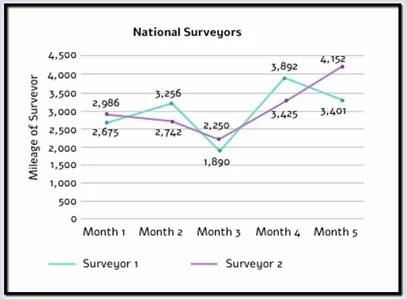
Employers commonly use numerical reasoning assessments when hiring for roles that involve data analysis, financial decision-making or commercial problem-solving. Candidates may be asked to interpret tables, charts and graphs, perform calculations or compare numerical information.
These tests can help employers identify individuals who are comfortable working with numbers and making evidence-based decisions. As a result, they're often used for finance, analytical, operational and commercial roles where numerical accuracy and data interpretation are important to day-to-day performance.
Sample question:
A company made a profit of $10,000 in the first quarter and $20,000 in the second quarter. What was the average quarterly profit for the company?
A. $10,000
B. $15,000
C. $20,000
D. $30,000
To find the answer, add the profit from the two given quarters together, before dividing by the number of quarters (in this case, 2).
Correct Answer: B
Verbal Reasoning Tests
Verbal reasoning tests assess a candidate's ability to understand, interpret and evaluate written information. They measure how effectively someone can process information, identify key messages and draw logical conclusions from text.
In recruitment, employers often use verbal reasoning assessments for roles that require strong communication, comprehension and decision-making skills. Candidates are typically asked to review written passages and determine whether statements are true, false or cannot be determined based on the information provided.
These tests can provide insight into how well a candidate understands complex information and applies it in practical situations. As a result, they're commonly used for management, professional services, customer-facing and administrative roles where interpreting information accurately is an important part of the job.
Sample question:
No cheap earrings are solid gold.
All children’s earrings are cheap earrings.
Which one of the following statements is definitely true based on these statements?
A. All children’s earrings are solid gold.
B. No children’s earrings are solid gold.
C. Some children’s earrings are solid gold.
D. Some children’s earrings are not solid gold.
To answer this question, you can only look at the given information. We know that cheap earrings are not solid gold. We know that children only have cheap earrings. This means no children can have solid gold earrings, as all of their earrings are cheap.
Answer: B
Diagrammatic Reasoning Tests
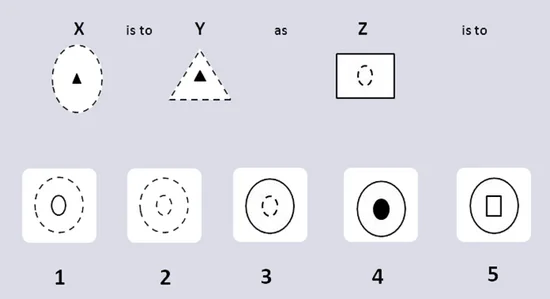
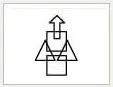
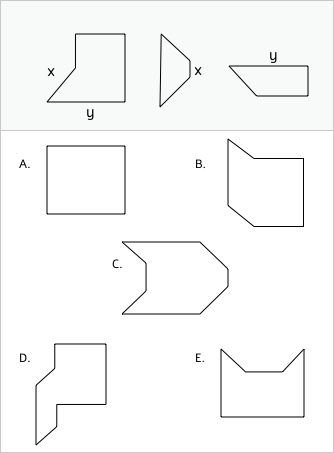
Diagrammatic reasoning tests assess a candidate's ability to identify patterns, recognise relationships and solve problems using visual information. Rather than relying on language or numerical data, these assessments evaluate how effectively someone can think logically when presented with unfamiliar concepts.
Candidates are typically asked to analyse sequences of shapes, symbols or diagrams and identify the rules that govern them. This helps employers assess abstract thinking and pattern-recognition skills. Diagrammatic reasoning can be of particular use when hiring for roles that require strong visual thinking and problem-solving skills, such as design or engineering roles.
Sample question:
Examine this selection of shapes and choose what should come next in the series.
⬥▲◼⬦△…
A. ◻
B. ▼
C. ◁
D. ⭘
If we examine the pattern, we can see that the order of the shapes appears to be consistent. A diamond is followed by a triangle, followed by a square. We can also see the first set of shapes is all black, with the second set all white. A square would be the next logical shape to continue the consistent order, and it should be white to complete the set.
Answer: A
Situational Judgement Tests
Situational judgement tests assess how candidates are likely to respond to realistic workplace scenarios. They are designed to evaluate decision-making, judgement and behavioral effectiveness in situations commonly encountered on the job.
Candidates are presented with work-related scenarios and asked to identify the most and least effective responses from a range of options. This helps employers understand how individuals may approach challenges involving communication, teamwork, prioritisation and customer interactions.
Situational judgement tests are commonly used for customer-facing, management and leadership roles where effective decision-making and interpersonal skills are important.
E-tray and Intray Exercises
E-tray and intray exercises simulate workplace tasks to assess how candidates manage competing priorities, organise workloads and make decisions under pressure.
Candidates are typically presented with a series of emails, messages or tasks and asked to decide how they would respond, prioritise activities or allocate their time. This provides employers with insight into a candidate's organizational skills and approach to managing day-to-day responsibilities.
These exercises are commonly used for management, administrative and operational roles where effective prioritisation and decision-making are essential. By recreating realistic workplace scenarios, they can help employers evaluate how candidates may perform in the role before they are hired.
Logical and Abstract Reasoning Tests
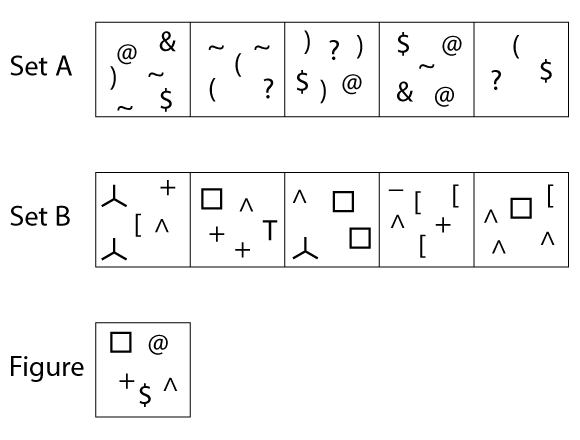
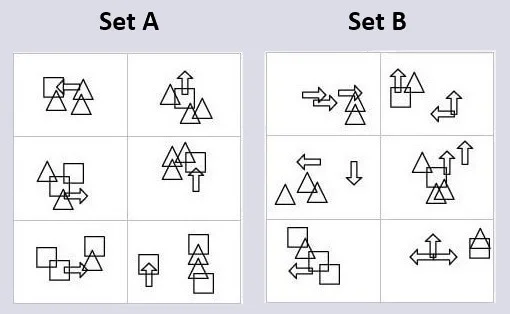
Logical and abstract reasoning tests assess a candidate's ability to identify patterns, apply logic and solve unfamiliar problems. Unlike knowledge-based assessments, they focus on how individuals process information and reach conclusions when faced with new situations.
Candidates are typically presented with sequences, patterns or relationships and asked to determine the correct outcome based on the information provided. This helps employers evaluate critical thinking, problem-solving ability and learning potential.
These assessments are commonly used for graduate, technical and analytical roles where employees need to interpret information, adapt quickly and tackle complex challenges. They can provide valuable insight into a candidate's ability to learn new concepts and perform in environments where problem-solving is a key part of the role.
Error Checking Tests
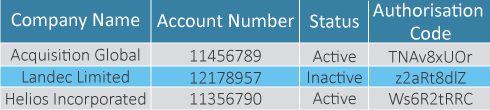
Error checking tests assess a candidate's attention to detail and ability to identify inaccuracies in information. Candidates are typically asked to compare data, review records or spot discrepancies within a set of documents.
These assessments help employers evaluate accuracy, concentration and consistency when working with detailed information. They can be particularly useful in roles where even small mistakes may have operational, financial or compliance implications.
Error checking tests are commonly used for administrative, compliance, data entry and operational positions. By measuring a candidate's ability to maintain accuracy under time constraints, they provide additional insight into suitability for detail-oriented roles.
Benefits of Aptitude Testing in Recruitment
Aptitude testing can help organizations make more informed hiring decisions by introducing objective, data-driven insights into the recruitment process. While interviews and CV reviews remain valuable, aptitude assessments provide an additional layer of evidence that can improve hiring confidence, support consistency and strengthen long-term talent outcomes.
When used as part of a structured hiring strategy, aptitude testing helps organizations move beyond intuition alone and make decisions based on measurable candidate capabilities.
Improve hiring consistency
One of the most valuable benefits of aptitude testing is the ability to evaluate candidates using the same criteria and assessment standards.
Every applicant completes the same assessment under the same conditions, creating a consistent benchmark that supports fairer comparisons across the candidate pool. This can be particularly valuable when multiple hiring managers are involved or when organizations are recruiting across different departments, locations or business units.
By introducing a standardised assessment process, employers can reduce variation in hiring decisions and create a more consistent recruitment experience.
Support more objective decision-making
CVs and interviews provide important information, but they can also be influenced by subjective interpretation and unconscious bias.
Aptitude tests add an additional source of structured evidence by assessing role-relevant capabilities such as reasoning, problem-solving and information processing. This allows hiring teams to evaluate candidates using measurable data alongside other recruitment information.
This can help employers:
- Compare candidates more objectively
- Reduce reliance on intuition alone
- Improve confidence in hiring decisions
- Support a more evidence-based recruitment process
- Create greater consistency across recruitment teams
Identify potential as well as experience
Previous experience can indicate capability, but it does not always reveal future potential.
Aptitude testing helps employers assess a candidate's ability to learn, adapt and solve problems, providing insight into capabilities that may not be obvious from a CV alone. This can be particularly valuable when recruiting graduates, career changers or candidates with transferable skills.
By identifying learning potential alongside existing experience, organizations can broaden talent pools and uncover candidates who may be able to succeed despite having a non-traditional background.
Improve scalability for growing recruitment demands
As organizations grow, recruitment processes often become more complex. Larger applicant volumes, multiple stakeholders and increasing hiring demands can make it difficult to maintain consistency.
Aptitude testing provides a scalable way to assess candidates using common standards across the organization. This can help recruitment teams manage larger hiring volumes while maintaining quality and objectivity throughout the process.
Support long-term workforce success
The value of aptitude testing does not end once a hiring decision has been made.
Assessment insights can also support onboarding, development planning and future talent conversations by helping managers better understand how individuals learn, process information and approach challenges.
When integrated into a broader talent strategy, aptitude testing can contribute to:
- More targeted onboarding support
- Development planning and skills growth
- Leadership identification
- Internal mobility discussions
- Succession planning conversations
Key benefits of aptitude testing
- More consistent hiring decisions
- Greater objectivity in candidate assessment
- Improved visibility into candidate potential
- Better support for high-volume recruitment
- Increased confidence in hiring outcomes
- Stronger foundations for onboarding and development
- Improved alignment with structured hiring practices
Limitations and Considerations of Aptitude Testing
While aptitude tests can provide valuable insight into candidate capability, they should not be used in isolation. Like any assessment method, they are most effective when combined with other recruitment tools and interpreted within the wider context of the hiring process.
Aptitude tests don't provide the full picture
Aptitude assessments measure specific cognitive abilities, such as reasoning, problem-solving and information processing. However, they do not typically assess factors such as motivation, personality, values or cultural contribution.
For this reason, employers should avoid making hiring decisions based solely on assessment scores. Combining aptitude testing with interviews and other assessments can provide a more balanced view of candidate suitability.
Results require appropriate interpretation
Assessment results should always be interpreted in the context of the role being hired for. A strong score may indicate high potential, but it does not automatically mean a candidate will be successful in every environment or position.
Employers should consider assessment outcomes alongside job requirements, experience and other evidence gathered during the recruitment process.
Candidate experience matters
The assessment process can influence how candidates perceive an organization. Tests that are too long, poorly explained or unrelated to the role may negatively affect engagement and completion rates.
To create a positive candidate experience, employers should:
- Explain why assessments are being used
- Select tests that are relevant to the role
- Keep the process proportionate
- Provide clear instructions and expectations
Fairness and relevance are essential
Aptitude testing should support fair and objective hiring practices. Assessments should be relevant to the role, applied consistently and reviewed regularly to ensure they remain appropriate for the organization's hiring needs.
When implemented thoughtfully, aptitude tests can strengthen recruitment decisions. However, they work best as one component of a structured assessment strategy rather than a standalone hiring solution.
When Should Companies Use Aptitude Testing?
Aptitude testing can add value at almost any stage of the recruitment process, but it becomes particularly useful when organizations need to make hiring decisions consistently and at scale.
While smaller organizations may use aptitude tests for specific roles, larger employers often incorporate them into broader recruitment strategies to improve efficiency and reduce subjectivity.
During high-volume recruitment
When hiring teams are reviewing large numbers of applications, aptitude tests can help identify candidates who demonstrate the capabilities required for the role before progressing to interview stages.
This can streamline candidate screening while ensuring assessments remain consistent across the applicant pool.
For graduate and early-career hiring
Graduate recruitment programmes often involve candidates with limited professional experience. In these situations, aptitude testing can help employers assess potential, learning agility and problem-solving ability rather than relying solely on academic achievements or interview performance.
For technical and specialist roles
Many technical, analytical and professional roles require strong reasoning, information processing and decision-making skills. Aptitude tests can provide additional insight into these capabilities and help employers assess suitability against role requirements.
When hiring consistency becomes a challenge
As organizations grow, recruitment decisions are often shared across multiple managers, teams or locations. This can lead to inconsistencies in how candidates are evaluated.
Introducing aptitude testing can help establish a common assessment framework, supporting more objective and comparable hiring decisions across the organization.
Signs your organization may benefit from aptitude testing
- Large application volumes
- Multiple hiring managers
- Graduate recruitment programmes
- Technical or analytical hiring needs
- Inconsistent hiring outcomes
- A desire for more objective recruitment decisions
Used appropriately, aptitude tests can help organizations build a more structured recruitment process while providing additional confidence in hiring decisions.
How Aptitude Tests Fit Into the Recruitment Process
Aptitude tests are most effective when they're integrated into a structured recruitment process rather than used as a standalone hiring tool. Used alongside interviews and other assessments, they can provide additional insight into candidate capability and support more informed hiring decisions.
1. Initial candidate screening
Many organizations use aptitude tests early in the recruitment process to help identify candidates who demonstrate the capabilities required for the role.
This can be particularly useful when managing large applicant volumes, helping recruiters focus on candidates who meet key assessment criteria before progressing to later stages.
2. Shortlist refinement
Aptitude testing can also help employers differentiate between candidates with similar qualifications or experience.
When several applicants appear equally strong on paper, assessment results can provide additional evidence to support shortlisting decisions and identify those with the greatest potential.
3. Supporting interviews
Assessment results can be used to inform interview discussions and explore areas in more detail.
For example, recruiters may ask candidates to explain how they approached certain problems or discuss examples that demonstrate the skills highlighted during testing.
Using assessment insights in this way can help create more structured and focused interviews.
4. Supporting final hiring decisions
Aptitude tests should not determine hiring decisions on their own. Instead, they should be considered alongside other sources of evidence, including interviews, experience and role-specific assessments.
Combining multiple assessment methods can help employers build a more complete understanding of candidate suitability.
A simple aptitude testing workflow
- Review applications and CVs
- Invite suitable candidates to complete aptitude assessments
- Use results to refine the shortlist
- Conduct structured interviews
- Combine assessment and interview insights
- Make informed hiring decisions
When incorporated into a wider assessment strategy, aptitude testing can help organizations create a more consistent, objective and evidence-based recruitment process.
How Aptitude Tests Are Scored and Interpreted
Aptitude test scores are typically used to compare a candidate's performance against a benchmark or reference group. Rather than focusing solely on the number of correct answers, employers use these results to understand how a candidate performs relative to others and whether their capabilities align with the demands of the role.
The goal is not simply to identify the highest-scoring candidate, but to assess whether an individual demonstrates the level of reasoning, problem-solving or information-processing ability needed to succeed in a particular position.
Percentile and benchmark scoring
Many aptitude tests use percentile scoring. This shows how a candidate performed compared to a relevant comparison group.
For example, a candidate who scores in the 75th percentile has performed better than 75% of individuals within the benchmark group used for comparison.
Benchmarking provides valuable context because a score only becomes meaningful when viewed against an appropriate reference population. Depending on the assessment provider and hiring objective, benchmark groups may include:
- General working populations
- Graduate candidates
- Managers and leaders
- Technical professionals
- Industry-specific groups
Using the right benchmark helps employers evaluate candidates against the level of ability typically associated with success in similar roles.
Interpreting results in context
Assessment scores should always be considered alongside other recruitment information, including experience, qualifications, behavioral assessments and interview performance.
A strong aptitude score may indicate high learning potential, analytical capability or problem-solving ability, but it does not guarantee success in every role or organizational environment. Equally, a lower score should not automatically exclude a candidate if other evidence suggests they possess relevant experience, motivation or transferable strengths.
The most effective hiring decisions are typically based on multiple sources of evidence rather than a single assessment outcome.
Why aptitude tests should not be used as pass-or-fail measures
One common mistake is treating aptitude testing as a pass-or-fail exercise.
While assessment results can help identify strengths and development areas, they are most valuable when used to inform decision-making rather than determine it in isolation. Different roles require different capability levels, and success is influenced by a combination of cognitive ability, experience, behavioral fit, motivation and job-specific skills.
Employers should focus on how closely a candidate's profile aligns with the requirements of the role rather than viewing assessment scores as a standalone hiring decision.
Why interpretation matters
The value of aptitude testing lies not just in the score itself, but in how the results are applied.
When interpreted appropriately, aptitude assessments can help employers:
- Compare candidates more consistently
- Identify strengths and potential development areas
- Support structured interview discussions
- Make more informed hiring decisions
- Build a fairer and more evidence-based recruitment process
Used as part of a wider assessment strategy, aptitude test results provide valuable insight that can support more objective and confident hiring decisions.
Aptitude Tests vs Psychometric Tests
Aptitude tests are simply one type of psychometric assessment. While aptitude tests focus on a candidate's cognitive abilities and potential, psychometric testing is a broader category that can also include personality, behavioral and emotional intelligence assessments.
The terms are often used interchangeably, but they do not mean exactly the same thing.
| Assessment type | What it measures | Common recruitment use cases |
|---|---|---|
| Aptitude tests | Cognitive ability, reasoning and problem-solving. | Candidate screening, graduate hiring, analytical and technical roles. |
| Personality assessments | Workplace preferences, motivations and behavioral tendencies. | Team fit, leadership development and recruitment. |
| Behavioral assessments | How individuals are likely to behave at work. | Hiring, team development and management effectiveness. |
| Emotional intelligence assessments | Self-awareness, relationship management and interpersonal skills. | Leadership, customer-facing and people management roles. |
Understanding the difference
Aptitude tests help employers understand what a candidate is capable of learning or achieving. They focus on areas such as numerical reasoning, verbal reasoning and logical thinking.
Psychometric assessments provide a broader view of an individual. Depending on the assessment used, they can help employers understand how someone is likely to communicate, collaborate, respond to challenges and contribute within a team.
Which should employers use?
The most effective approach is often to combine multiple assessment types. Aptitude tests can provide insight into cognitive capability, while psychometric assessments can help employers understand workplace behavior, communication style and development potential.
Used together, these tools can support a more complete and objective view of candidate suitability.
Choosing the Right Aptitude Test for Your Hiring Process
The most effective aptitude test is the one that aligns closely with the requirements of the role. Different assessments measure different capabilities, so employers should focus on the skills most likely to influence performance and success in the position.
Rather than applying the same assessment across every hiring process, it's often more effective to select tests based on the demands of the role and the outcomes you're trying to achieve.
| Hiring goal | Recommended assessment | Organizational benefit |
|---|---|---|
| Graduate recruitment | Logical and abstract reasoning. | Identifies learning potential and problem-solving ability. |
| Leadership hiring | Situational judgement tests. | Assesses decision-making and judgement. |
| Technical recruitment | Logical, abstract and numerical reasoning. | Evaluates analytical and problem-solving capability. |
| Customer-facing roles | Verbal reasoning and situational judgement. | Supports communication and service-focused hiring. |
| Operational and administrative hiring | Error checking and e-tray exercises. | Measures accuracy, organization and prioritisation. |
Questions to consider
When selecting aptitude tests, employers should consider:
- Which skills are most important for success in the role?
- What challenges are employees likely to face?
- Where are hiring decisions currently most difficult?
- How will assessment results be used alongside interviews and other evaluation methods?
The best outcomes are typically achieved when aptitude testing forms part of a wider assessment strategy. Combining cognitive, behavioral and personality insights can help organizations make more informed hiring decisions while creating a more structured and consistent recruitment process.
Common Mistakes When Using Aptitude Testing
Aptitude tests can strengthen recruitment decisions, but only when they're used appropriately. Without a clear assessment strategy, organizations risk overlooking valuable candidates or misinterpreting results.
Using aptitude tests in isolation
One of the most common mistakes is relying too heavily on assessment scores. Aptitude tests provide insight into specific cognitive abilities, but they don't measure every factor that contributes to success in a role.
Assessment results should be considered alongside interviews, experience and other relevant hiring data.
Choosing assessments that don't match the role
Not every aptitude test is relevant for every position. Using assessments that aren't aligned with job requirements can reduce the usefulness of the results and create an unnecessary burden for candidates.
Employers should select assessments based on the skills and capabilities that genuinely influence performance in the role.
Applying inconsistent evaluation criteria
Assessment results are most valuable when they're interpreted consistently. Different hiring managers applying different standards can undermine the objectivity that aptitude testing is designed to support.
Establishing clear assessment criteria and decision-making frameworks can help improve consistency across the recruitment process.
Common pitfalls to avoid
- Using aptitude tests as the sole hiring criterion
- Selecting assessments with limited relevance to the role
- Overlooking candidate experience
- Applying inconsistent interpretation standards
- Failing to integrate assessments into a structured hiring process
When used as part of a broader assessment strategy, aptitude tests can provide meaningful hiring insights while supporting fairer and more informed recruitment decisions.
How Aptitude Testing Supports Onboarding and Employee Development
The value of aptitude testing doesn't end once a hiring decision has been made. The insights gained during recruitment can also support onboarding, employee development and longer-term workforce planning.
Understanding how an individual learns, processes information and approaches problem-solving can help managers provide more effective support during the early stages of employment. This can improve the onboarding experience, accelerate integration into the role and help new hires become productive more quickly.
Supporting more effective onboarding
Assessment insights can help managers understand where new employees may need additional support, training or guidance during their first months in a role.
For example, understanding a new hire's strengths in areas such as reasoning, information processing or learning agility can help organizations:
- Tailor onboarding plans to individual needs
- Identify areas where additional support may be beneficial
- Structure learning and development activities more effectively
- Help employees become confident and productive more quickly
When onboarding is informed by assessment data, managers can move beyond one-size-fits-all approaches and provide more targeted support from day one.
Supporting employee development
Aptitude assessments can also provide valuable insight into an employee's strengths and future development potential.
Combined with performance data, manager feedback and behavioral assessments, these insights can help organizations create more targeted development plans and identify opportunities for growth.
This can support:
- Personal development planning
- Skills development initiatives
- Leadership development programmes
- Coaching and mentoring conversations
- Career progression discussions
By understanding how individuals learn and solve problems, organizations can make more informed decisions about where development investment is likely to have the greatest impact.
Supporting internal mobility and succession planning
Many organizations are looking beyond external hiring and focusing on how they can develop talent from within.
Assessment insights can help identify employees who demonstrate the learning potential, reasoning ability or adaptability needed to succeed in future roles. This can support internal mobility programmes by helping organizations recognise talent that may not be immediately visible through performance history alone.
The same insights can also contribute to succession planning by providing an additional source of information when identifying future leaders and high-potential employees.
Used appropriately, aptitude assessments can help organizations make more informed decisions about talent development and future workforce needs.
Creating value beyond recruitment
When integrated into a wider people strategy, aptitude testing becomes more than a hiring tool.
Alongside behavioral, personality and emotional intelligence assessments, aptitude insights can help organizations build a deeper understanding of employee potential across the entire talent lifecycle—from recruitment and onboarding through to development, leadership planning and internal mobility.
This broader approach enables organizations to make more consistent, evidence-based people decisions while supporting employee growth and long-term business performance.
Informing future people decisions
As employees grow within an organization, assessment insights can provide additional context for development conversations and succession planning.
Used alongside performance data and manager feedback, aptitude testing can help organizations better understand employee potential and support more informed talent decisions.
When integrated into a wider people strategy, aptitude assessments can provide value beyond recruitment, helping organizations support employee growth and long-term business performance.
FAQs
What are aptitude tests in recruitment?
Aptitude tests are assessments used to measure a candidate's ability to solve problems, process information and apply reasoning skills. Employers use them alongside interviews and CV reviews to gain a more objective understanding of candidate potential and role suitability.
Why do employers use aptitude tests?
Employers use aptitude tests to support more consistent and objective hiring decisions. They can help assess capabilities that may not be visible through CVs or interviews alone, including problem-solving ability, learning potential and reasoning skills.
What do aptitude tests measure?
Aptitude tests typically measure cognitive abilities such as numerical reasoning, verbal reasoning, logical thinking, abstract reasoning and problem-solving. They focus on how candidates think and learn rather than what they already know.
What are the different types of aptitude tests?
Common aptitude tests include numerical reasoning, verbal reasoning, diagrammatic reasoning, logical reasoning, situational judgement tests, e-tray exercises and error checking assessments. Different tests are used depending on the requirements of the role.
Are aptitude tests accurate?
Aptitude tests can provide valuable insight into candidate capability when used appropriately. However, they are most effective when combined with interviews, behavioral assessments and other hiring methods rather than being used as a standalone decision-making tool.
What are the limitations of aptitude testing?
Aptitude tests do not assess every aspect of candidate suitability. They typically do not measure personality, motivation, values or cultural contribution, which is why employers often use them alongside other assessment methods.
How are aptitude tests used in recruitment?
Aptitude tests are commonly used during candidate screening, shortlist refinement and interview preparation. They help employers evaluate candidates consistently and provide additional evidence to support hiring decisions.
What is the difference between aptitude tests and psychometric tests?
Aptitude tests are a type of psychometric assessment focused on cognitive ability and reasoning skills. Psychometric testing is a broader category that can also include personality, behavioral and emotional intelligence assessments.
Making Aptitude Testing Part of a Smarter Hiring Strategy
Aptitude testing can play an important role in helping organizations make better informed and consistent hiring decisions. By assessing capabilities such as reasoning, problem-solving and learning potential, aptitude tests provide valuable insight that complements CVs, interviews and other assessment methods.
When used as part of a structured recruitment process, aptitude testing can help employers identify potential, improve hiring consistency and make decisions with greater confidence. However, like any assessment tool, it is most effective when combined with other sources of information and interpreted within the context of the role.
As organizations continue to balance hiring quality with recruitment efficiency, aptitude testing remains a valuable way to introduce evidence-based decision-making into the hiring process. This aptitude testing guide has explored how these assessments work, where they add value and how employers can use them effectively to support better recruitment outcomes.